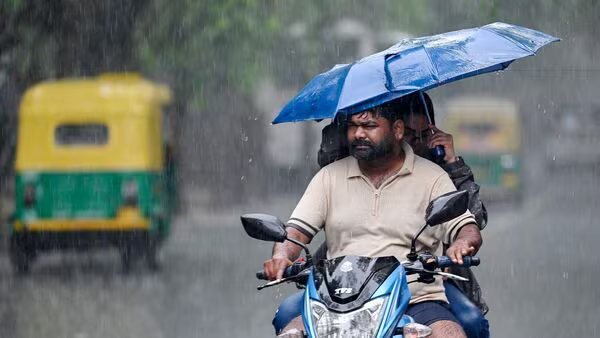
Weather can change quickly, making a reliable weather forecast today essential for planning work, travel, outdoor activities, farming, commuting, and daily routines. A good forecast provides more than just the expected temperature. It can also include rain predictions, humidity, wind speed, cloud cover, thunderstorms, visibility, and severe weather warnings.
For India, the India Meteorological Department (IMD) remains an important official source for weather observations, forecasts, and warnings. Its national forecast bulletins provide information on rainfall, temperatures, thunderstorms, and significant weather systems across different regions. (Mausam)
Today’s Weather Forecast: What to Expect
The weather forecast today depends heavily on location. India has a diverse climate, so conditions can vary considerably between northern plains, the Himalayan region, central India, coastal areas, and the northeast.
During the monsoon season, rainfall can be particularly variable. One city may experience clear skies while another nearby location receives heavy showers. This is why checking a local weather forecast is generally more useful than relying only on a nationwide prediction.
Current IMD forecasts indicate that several parts of India are experiencing significant monsoon activity. Forecast information issued by IMD on August 16, 2026, indicated rainfall activity across multiple regions, including Uttar Pradesh, Bihar, Odisha, Jharkhand, parts of central India, the northeast, and coastal areas. (Mausam)
Temperature Today: Maximum and Minimum Forecast
Temperature is one of the most commonly searched parts of a daily weather report. The maximum temperature indicates how warm conditions are expected to become during the daytime, while the minimum temperature generally represents the coolest period, often occurring around early morning.
However, the temperature shown in a forecast does not always represent how the weather feels. Humidity, wind, cloud cover, and rainfall can significantly influence perceived temperature.
For example, a moderately warm day with high humidity may feel considerably hotter than the actual temperature suggests. Similarly, strong winds can make cooler conditions feel more uncomfortable.
When checking today’s temperature, it is useful to look at:
- Today’s maximum temperature
- Today’s minimum temperature
- Morning temperature
- Afternoon temperature
- Evening temperature
- Night temperature
- Humidity percentage
- Wind speed and direction
- Probability of precipitation
Rain Prediction Today
The rain forecast today is especially important during India’s monsoon season. Rainfall can range from isolated showers to widespread heavy precipitation.
The latest IMD national bulletin issued on August 16 reported widespread or fairly widespread rainfall possibilities across several regions through the following days. It also identified areas where heavy or very heavy rainfall could occur. (Mausam)
Rain predictions should be interpreted together with the probability, expected intensity, and timing of precipitation. A forecast for a chance of rain does not necessarily mean that it will rain continuously throughout the day.
For daily planning, people should consider whether rain is expected:
- In the morning
- Around midday
- During the afternoon
- In the evening
- Overnight
This information can help commuters, travelers, students, outdoor workers, and businesses make better decisions.
Heavy Rainfall and Severe Weather Warnings
A normal rain forecast is different from a severe weather warning. When meteorological agencies identify the possibility of dangerous conditions, they may issue warnings concerning heavy rainfall, thunderstorms, lightning, strong winds, flooding, or other hazards.
The IMD’s August 16 bulletin highlighted heavy rainfall risks across several parts of India, including portions of Uttar Pradesh, Bihar, Odisha, Jharkhand, the Western Himalayan region, and other areas. (Mausam)
People living in or traveling through affected areas should pay particular attention to official warnings rather than relying only on general weather apps.
During thunderstorms, it is advisable to avoid exposed outdoor locations and remain alert to official instructions. During heavy rainfall, people should also be cautious around flooded roads, underpasses, rivers, drainage channels, and low-lying areas.
Weather Forecast for Uttar Pradesh
Uttar Pradesh can experience substantial variations in weather between western, central, and eastern districts. During the monsoon, rainfall can become frequent, while thunderstorms may occur in some areas.
The latest IMD national forecast indicated heavy rainfall possibilities over Uttar Pradesh, with East Uttar Pradesh forecast to experience rainfall activity over an extended period. Thunderstorm and lightning activity was also indicated for parts of the state. (Mausam)
Because weather conditions can differ significantly between cities, residents should check district-level forecasts when making travel or outdoor plans.
Weather Forecast for Major Indian Regions
North India
Northern India can experience a mixture of rainfall, thunderstorms, cloudy skies, and periods of relatively dry weather during the monsoon. The Himalayan region may receive heavier precipitation in some periods.
IMD forecasts have highlighted rainfall risks in parts of the Western Himalayan region and northern plains. (Mausam)
Central India
Central India can experience widespread monsoon rainfall, particularly across Madhya Pradesh and Chhattisgarh. Localized heavy rainfall may occur when favorable weather systems develop.
East India
Eastern India can experience active monsoon conditions. Recent IMD forecasts highlighted rainfall across Bihar, Jharkhand, Odisha, Gangetic West Bengal, and neighboring areas, with some locations facing heavy or extremely heavy rainfall risks. (Mausam)
Northeast India
The northeast generally receives substantial rainfall during the monsoon. Assam, Meghalaya, Arunachal Pradesh, Nagaland, Manipur, Mizoram, and Tripura can experience widespread rainfall and thunderstorms.
West India
Coastal Maharashtra and Goa can receive frequent monsoon showers. Gujarat and other western areas may experience a mixture of scattered and isolated rainfall depending on the prevailing weather system.
South India
Southern and coastal regions experience diverse rainfall patterns. Coastal Karnataka, Kerala, Tamil Nadu, Telangana, Andhra Pradesh, Karnataka, and nearby regions can experience varying levels of rainfall during the monsoon.
Why Weather Forecasts Sometimes Change
A weather forecast is based on observations, satellite information, radar data, numerical weather prediction models, and atmospheric analysis. Weather systems can evolve rapidly, particularly during thunderstorms and monsoon conditions.
This means a forecast issued several days in advance may change as new observations become available.
For this reason, we recommend checking the latest forecast and warnings before important travel or outdoor activities. IMD also provides radar and satellite-related weather information that can help monitor developing precipitation systems. (Mausam)
How to Check the Weather Forecast Today
To get the most useful local weather information, we should check several elements instead of looking only at the temperature.
A reliable daily weather check should include:
- Current temperature
- Today’s maximum and minimum temperature
- Rain probability
- Expected rainfall intensity
- Hourly forecast
- Humidity
- Wind speed
- Thunderstorm and lightning warnings
- Severe weather alerts
- Radar or satellite information when necessary
The official IMD website provides national forecasts, warnings, radar services, and other meteorological information. (Mausam)
Weather Forecast and Daily Travel Planning
Weather information can make everyday travel safer and more convenient. Before leaving home, we should check whether rain, thunderstorms, strong winds, or extreme temperatures are expected.
For commuters, rainfall can result in slower traffic and reduced visibility. Heavy rainfall may also cause temporary waterlogging or difficult road conditions.
Travelers should pay particular attention to official warnings when visiting mountainous or flood-prone regions.
Weather Forecast for Farmers
Weather forecasts are also extremely valuable for agriculture. Farmers can use information about expected rainfall, temperature, humidity, and thunderstorms when planning irrigation, harvesting, spraying, and other agricultural activities.
Rainfall forecasts can help reduce unnecessary irrigation, while severe weather warnings can provide additional time to protect crops, livestock, equipment, and agricultural infrastructure.
India’s meteorological services also provide agricultural weather information designed to support farming decisions.
Difference Between Weather and Climate
Weather describes atmospheric conditions over a relatively short period, such as today or tomorrow. Climate, on the other hand, describes long-term patterns and averages over many years.
For example, saying that a city is expected to receive rain today is a weather statement. Describing that city’s typical monsoon rainfall over many decades is a climate statement.
Understanding this difference helps us interpret weather information more accurately.
Frequently Asked Questions About Today’s Weather
What is the weather forecast today?
Today’s weather depends on the location. Temperature, rainfall, wind, humidity, and storm conditions can vary considerably between cities and districts. For the most accurate information, check the latest local forecast from an official meteorological service.
Will it rain today?
Rainfall depends on your location and the prevailing weather system. During active monsoon conditions, some areas may experience showers while nearby locations remain comparatively dry.
How accurate is a weather forecast?
Forecast accuracy generally decreases as the prediction period becomes longer. Short-term forecasts are particularly useful for immediate planning, while forecasts several days ahead may change as atmospheric conditions evolve.
What does heavy rainfall mean?
Heavy rainfall refers to rainfall reaching a level that meteorological authorities classify as significant for a particular region and time period. Official warnings should be followed whenever heavy rainfall is forecast.
Where can we find official weather warnings in India?
The India Meteorological Department publishes national forecasts, warnings, radar information, and other weather services. (Mausam)
Why does the weather forecast change during the day?
Forecasts can change because new satellite observations, radar measurements, weather-station readings, and updated prediction models provide additional information about atmospheric conditions.
Final Weather Update
The weather forecast today is an essential tool for making informed decisions about travel, work, outdoor activities, agriculture, and daily life. During India’s monsoon season, rainfall can vary dramatically from one location to another, making local forecasts and official warnings particularly important.
Recent IMD forecasts have identified active rainfall conditions across several parts of India, including portions of northern, eastern, central, northeastern, western, and southern regions. Some areas have also faced risks of heavy or very heavy rainfall. (Mausam)
For the latest temperature, rainfall, thunderstorm, and severe weather information, we should rely on current local forecasts and official meteorological warnings, especially when weather conditions could affect safety.