Doomsday Clock 2026: 85 Seconds to MidnightDoomsday Clock 2026: Humanityben she at the Brink — A Deep Dive Story
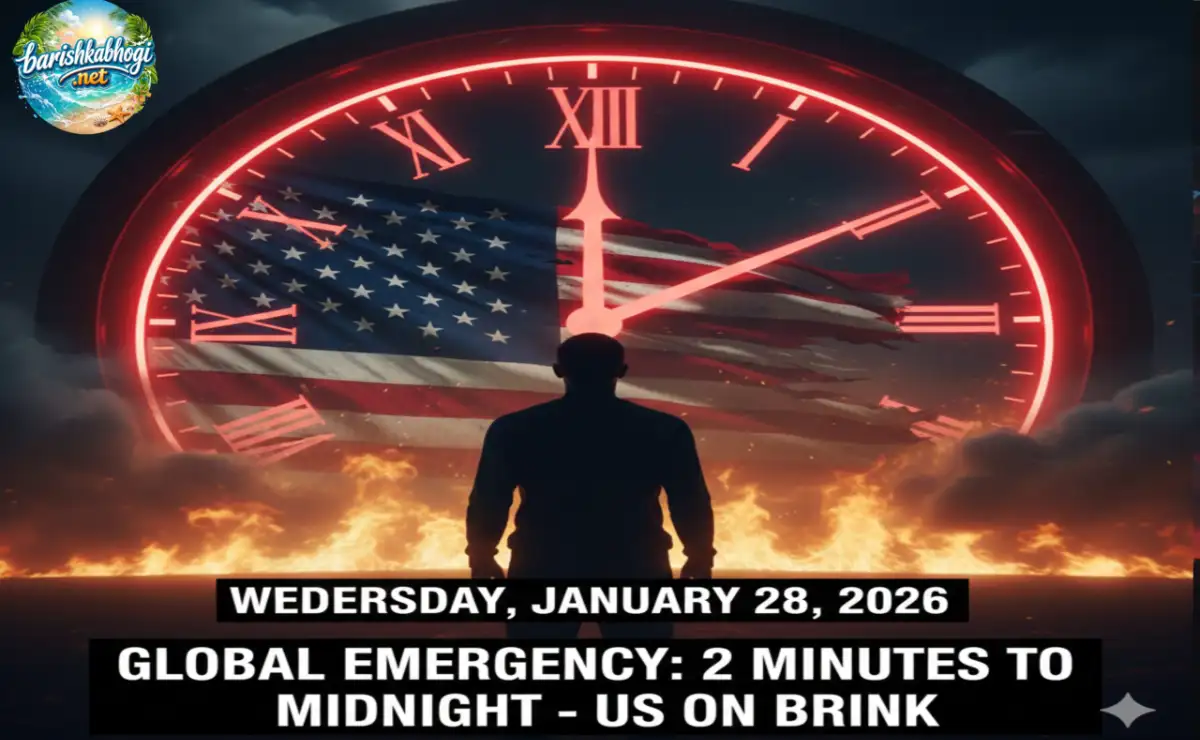
The Clock Strikes Closer
experts, and everyday Americans grapple with what it means for the future of Earth and humanity.
But what is this clock? How did it come to be? And why do experts say the world is closer to destruction than ever before? In this story-style article, we break down the science, the symbolism, and the solutions.
What Is the Doomsday Clock? — A Timepiece of Threats
The Doomsday Clock is not a real clock ticking on a wall — it is a symbolic gauge created by the Bulletin of the Atomic Scientists in 1947. It represents humanity’s proximity to self-inflicted global disaster based on nuclear danger, climate change, biotechnological threats, artificial intelligence risks, and geopolitical instability. (Wikipedia)
Originally set at seven minutes to midnight at its launch, the clock has moved backward and forward over the decades, responding to world events that either increased or reduced existential threats.
Today, with just 85 seconds to midnight, the image of the clock is sobering — and urgent. (Bulletin.
Why It Moved — The 2026 Reset Explained
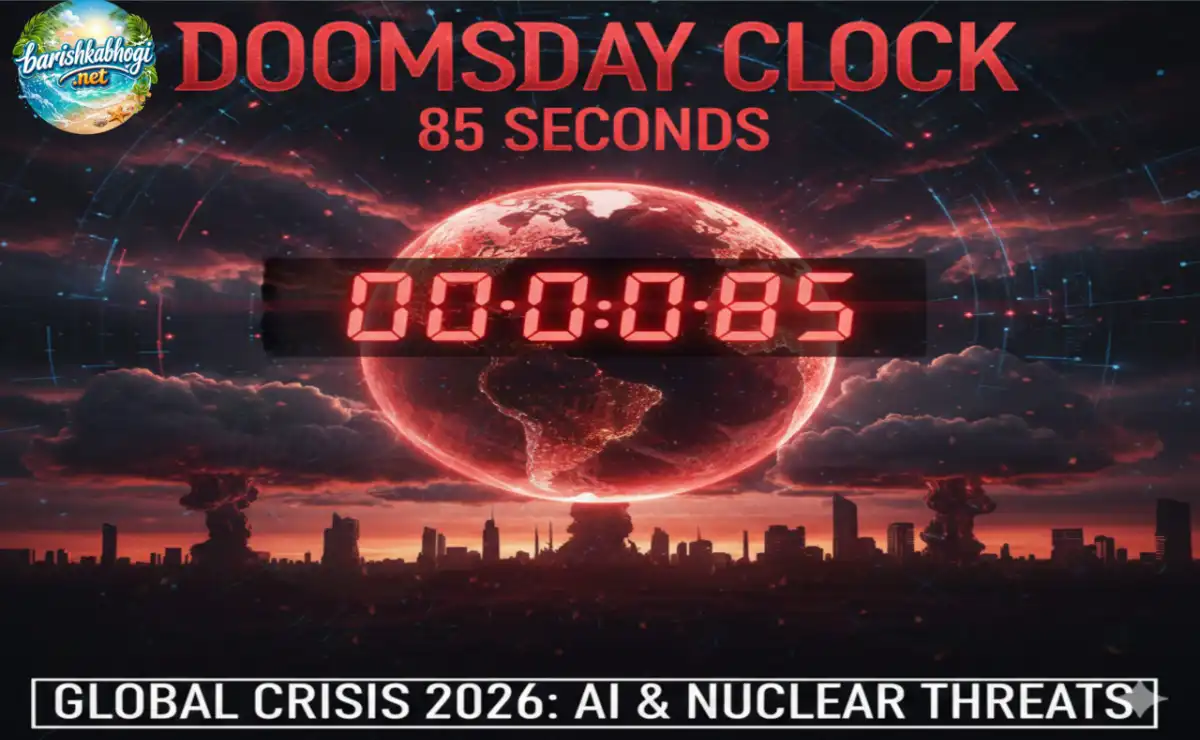
On January 27, 2026, the Bulletin of the Atomic Scientists announced that the clock would be moved to 85 seconds before midnight — the closest point to “doomsday” ever recorded. (Bulletin of the Atomic Scientists)
In announcing the shift, experts cited multiple, interlinked dangers:
- Nuclear threats: Growing international tensions and erosion of nuclear arms treaties have increased the risk of a devastating conflict.
- Climate crisis: Despite decades of warnings, global emissions and climate impacts continue to worsen.
- Artificial intelligence: The rapid spread of unregulated AI technologies adds unpredictable risk, from misinformation to autonomous weapons.
- Biological threats: New bioengineering capabilities raise concerns about global pandemics or misuse of biological systems.
- Failure of cooperation: Global divisions, mistrust, nationalism, and fractured diplomacy undermine collective action.
This year’s change was described not as a prediction, but as a warning — urging global leaders and citizens alike to act before midnight arrives.
The Symbolism — More Than Just a Clock
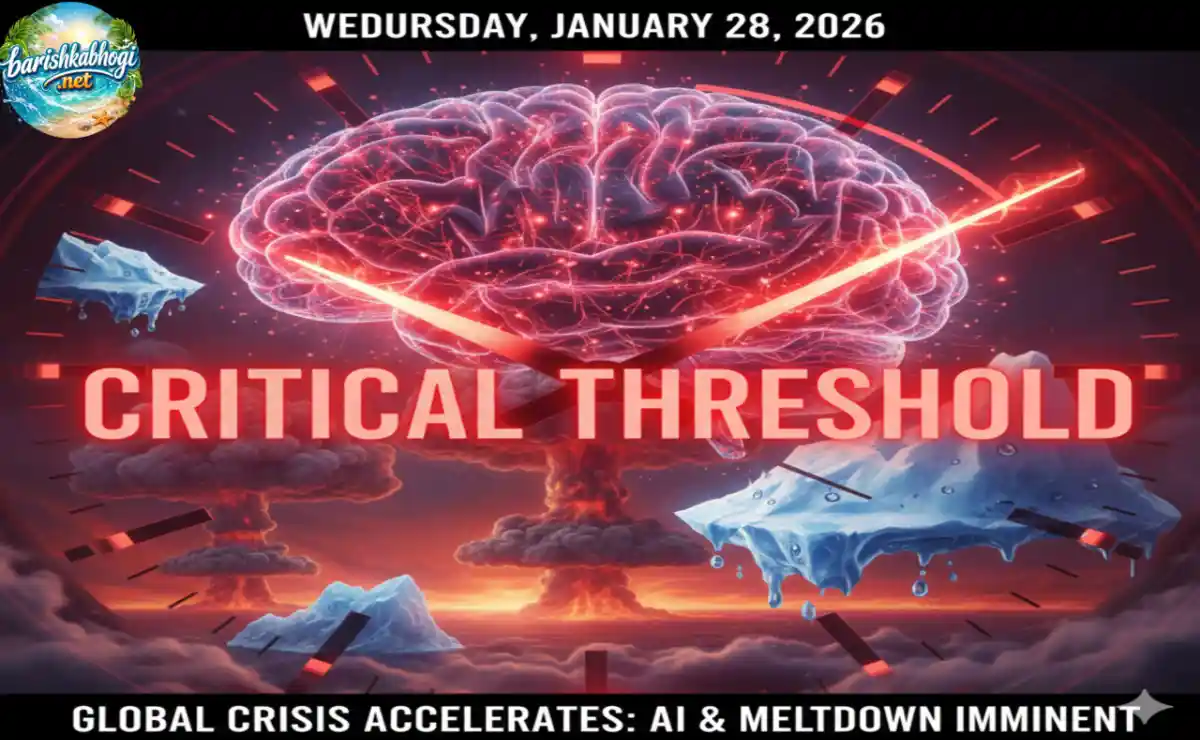
Why does a symbolic clock matter?
At its core, the Doomsday Clock is a wake-up call. It translates complex scientific and geopolitical data into a visual metaphor everyone can grasp: the closer the hands are to midnight, the closer humanity is to existential danger.
Scientists involved in setting the clock have explained that the measure reflects real human behavior — the policies we choose, the technologies we deploy, and the cooperation (or lack thereof) between nations.
For many, the clock’s new setting triggers reflection on how human decisions shape our collective fate.
History of the Clock — From Cold War to AI Era
The Doomsday Clock has a long history:
- 1947: Created by scientists including Albert Einstein’s colleagues.
- Cold War era: It was as far as 17 minutes to midnight after nuclear de-escalation in 1991.
- Recent decades: Growing challenges like climate change and digital warfare have kept the clock dangerously close to midnight.
- 2025: The clock was at 89 seconds before midnight — already record-close.
- 2026: Now at 85 seconds.
Each move reflects the changing landscape of global risk — from traditional nuclear fears to modern threats like AI and bioengineering.
The Major Risks Behind the 2026 Setting
Let’s break down the key threats:
1. Nuclear Threats
Nuclear weapons remain the ultimate existential risk. The dissolution of long-standing treaties and rising tensions between major powers — including the US, Russia, and China — have deepened fears of miscalculation or escalation.
Experts warn that decreased diplomatic channels and modernized arsenals could make accidents or intentional use more likely.
2. Climate Change
Despite global pledges and climate agreements, carbon emissions continue to rise. Hotter years, more extreme weather events, and melting ice caps serve as daily reminders that climate risk is real — and accelerating.
Scientists say the clock must reflect environmental collapse just as much as it does nuclear threats.
3. Artificial Intelligence Risks
Artificial intelligence sits at the frontier of innovation — but without regulation, it also introduces dangers:
- AI in autonomous weapons systems
- AI amplifying misinformation and social division
- Ethical questions in AI governance
These factors are now prominent when scientists assess global risk.
4. Biotechnological Threats
Advances in biological research could save millions of lives — but they also carry risks. Synthetic biology and lab-enhanced pathogens might pose threats that defy international borders and oversight.
While not often in daily headlines, these concerns are increasingly part of the clock’s calculation.
What Experts Actually Want — Action, Not Panic
The Bulletin’s leaders insist that the clock’s movement is not meant to cause fear alone — but to inspire change.
Alexandra Bell, president and CEO of the Bulletin, said that the clock’s message is a call for leaders and communities to demand swift action on global risks.
This includes:
Re-establishing nuclear arms control
Stronger climate commitments
AI governance frameworks
International cooperation on health and security
The clock is a reminder: while threats loom, they are human-made and thus human-solvable.
What Americans Should Know — A Closer Look at Impact
For US audiences, the Doomsday Clock’s setting has specific implications:
1. Nuclear Diplomacy
The US plays a leadership role in nuclear non-proliferation and arms control. Decisions made in Washington can ripple across global stability.
2. Climate Policy
As one of the world’s largest carbon emitters, US climate targets, energy policy, and environmental innovation are crucial.
3. Technology Regulation
US companies often lead in AI and biotech. Policy around innovation and ethics will shape not just US safety, but global risk.
4. Global Cooperation
The US presence in NATO, UN negotiations, and international treaties influences how risks are mitigated worldwide.
Understanding the clock helps Americans engage more deeply with public policy — not as abstract alarms, but as calls to civic action.
Critics and Context — Is the Clock Too Dramatic?
Some experts and commentators argue that the clock is more symbolic than predictive, questioning whether it exaggerates dangers or fails to convey gradations of risk. Debates on Reddit and opinion forums often reflect skepticism — with some dismissing the clock as fearmongering.
While critics differ on interpretation, even skeptics acknowledge that the clock sparks global conversations about issues that are otherwise complex and technical.
Hope & Solutions — Can We Turn Back Time?
The clock tells us “how close” humanity appears to danger — not “when” disaster will strike. In fact, scientists emphasize that collectian move the clock backward:
The clock is as much about possibility as it is about peril — a reminder that human choices matter.
FAQs — Quick Answers for Curious Readers
Q1: Is the Doomsday Clock counting down to an actual apocalypse?
No. It’s a symbolic index created by scientists to highlight global vulnerabilities, not a literal timer set to a specific event.
Q2: Why is it at 85 seconds now?
Because experts say current global threats — nuclear tension, climate change, AI and biosecurity risks — have become more severe compared to last year.
Q3: Can the clock move backward?
Yes. In years when progress is made — like arms reductions or climate agreements — the clock has previously moved away from midnight.
Q4: What actions can really reduce risks?
Diplomacy, regulation of emerging tech, environmental leadership, and global cooperation are key.
Conclusion — A Clock, But Also a Choice
The 2026 Doomsday Clock is meant to remind us that risk is not destiny. It reflects the current global condition — but not an inevitable fate. Every second closer to midnight signals the cost of inaction, and motivates people to push for innovation, unity, and policies that protect present and future generations.
For Americans and citizens worldwide, the clock is not just a warning — it’s an invitation to choose progress over peril.doomsday clockdoomsday clock 2026